In Tafsir al-Jalalayn it is stated that “Corruption has appeared on land, in the wastelands, because of the rain being withheld and the vegetation diminishing, and on sea, in lands near rivers because of their waters diminishing, because of what people’s hands have perpetrated, of acts of disobedience, that He may make them taste something of what they have done, that is, the punishment for it, that perhaps they may repent.” [Surah ar-Rum 30:41]
Abu Al-`Aliyah said: "Whoever disobeys Allah in the earth has corrupted it, because the good condition of the earth and the heavens depends on obedience to Allah.''
Pollution is everywhere. From the trash thrown out on the streets, to the millions of metric tons of pollution pumped into the atmosphere every year- it's obvious, pollution and waste are inescapable. Pollution is so bad that to date, 2.4 billion people (30% of the world) do not have access to clean water sources. Humanity is continuously polluting indispensable resources like air, water, and soil which requires millions of years to replenish.
Poor air quality is the largest environmental risk to public health in the UK, as long-term exposure to air pollution can cause chronic conditions such as cardiovascular and respiratory diseases as well as lung cancer, leading to reduced life expectancy.
It is estimated that long-term exposure to man-made air pollution in the UK leads to more than 28,000 deaths every year in this country.
Climate change Closely connected to the historical development of industry and technology. As global temperatures increase, Earth's weather patterns will drastically change. We are seeing it with freak weather conditions, floods and hurricanes in the UK as well as prolonged droughts and heatwaves.
The evidence is mounting that poor air quality and rising temperatures are ruining delicate ecosystems, even leading to increased asthma and cancer rates in humans.
Don’t be Toxic At present, tons of garbage are produced by each household each year. Items that can be recycled are sent to the local recycling unit while other items become a part of the landfills or sent to third world countries. Due to an increase in demand for food, shelter, and house, more goods are produced. This resulted in the creation of more waste that needs to be disposed of. Our streets are filled with crisp wrappers and mattresses flytipping is almost an art form.
There are 5.25 trillion pieces of plastic debris in the ocean. You may not think that this has anything do with you but a short walk to the River Lea shows that the behaviour of throwing garbage out without consideration is just being perpetuated.
High quantity of Exhaust gases: The biggest reason by far for all kinds of environmental damage is the exorbitant amount of gases, harmful to the environment, which is released by the various industries. Do you need to drive your car or could you walk or cycle instead? Could you pick someone else up rather than everyone having to drive there? Electric vehicles are a good option although they also have an impact on the environment.
Deforestation: Clearing land for housing or materials decreases the number of trees, which clean the environment, provide oxygen and also affect rain patterns. Interestingly, when Luton Masaajid organised the first dig for the local Peace Gardens in memory of all those who had passed away during Covid, there was quite low uptake from our neighbourhood.
The Messenger of Allah (ﷺ) said: Cleanliness is half of faith and al-Hamdu Lillah (all praise and gratitude is for Allah alone) fills the scale, and Subhan Allah (Glory be to Allah) and al-Hamdu Lillah fill up what is between the heavens and the earth, and prayer is a light, and charity is proof (of one's faith) and endurance is a brightness and the Holy Qur'an is a proof on your behalf or against you. All men go out early in the morning and sell themselves, thereby setting themselves free or destroying themselves. [Sahih Muslim 223]
At-Tahoor (cleanliness) both in spiritual purification with wudhu and physical purification of our selves and our environment. This applies to grooming yourself and ensuring your beard and hair are combed before attending the salaah.
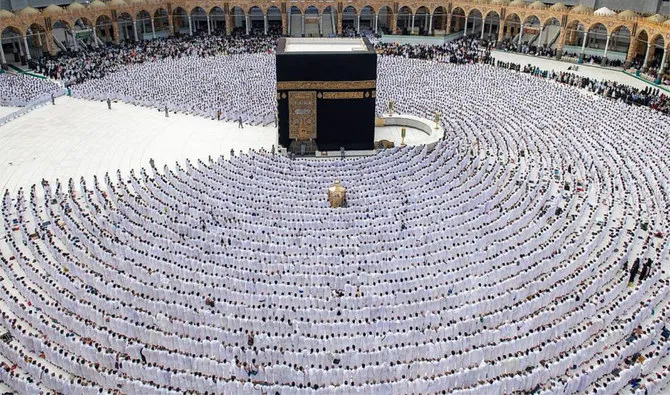
The best example is our usual Ramadan taraweeh - despite many reminders, free bottles are left half finished and discarded anywhere in the masjid. Allaah has commanded us to venerate the mosques as He says (interpretation of the meaning):
“In houses (mosques) which Allaah has ordered to be raised (to be cleaned, and to be honoured), in them His Name is remembered [i.e. Adhaan, Iqaamah, Salaah (prayers), invocations, recitation of the Qur’aan].” [al-Noor 24:36-37]
Imam al-Suyooti said: In this verse there is the command to venerate the mosques and cleanse them of idle talk and impure things. [Tafseer al-Qaasimi, 12/214]
Another sign that points to the virtue of the one who takes care of that is the report in al-Saheehayn from the hadeeth of Abu Hurayrah, that a black man or a black woman used to take care of the mosque, then he or she died. The Prophet (peace and blessings of Allaah be upon him) asked after him (or her) and was told that he had died. He said: “Why did you not inform me? Show me his grave (or her grave).” Then he went to the grave and offered the funeral prayer over it.” [al-Bukhaari, 458; Muslim, 956].
Al-Nasaa’i (728) and Ibn Maajah (762) narrated from Anas that the Prophet (peace and blessings of Allaah be upon him) saw some sputum in the qiblah of the mosque and he got so angry that his face turned red. Then a woman from among the Ansaar came and scratched it and put some perfume in that place. The Messenger of Allaah (peace and blessings of Allaah be upon him) said: “What a good deed this is.” [Saheeh Ibn Maajah]
It's not someone else's responsibility, it is yours. Here are some steps you can take to fulfil your responsibility:
- Consume less
- Allah's Messenger (ﷺ) said, "The food for two persons is sufficient for three, and the food of three persons is sufficient for four persons." [Sahih al-Bukhari 5392] - Reuse
- Coffee cups
- Water bottle rather than plastic bottles
- Recycle. Cut down on what you throw away. Follow the three "R's" to conserve natural resources and landfill space. Don't send chemicals into our waterways.
- Removing harmful items from from public paths is a sadaq
- Use your green recycling bins well
- Volunteer. Volunteer for cleanups in your community. You can get involved in protecting your watershed, too.
- Get involved in Madinah gardens and replicate the initiative by working with the council to identity ill-maintained areas for planting and improving the environment
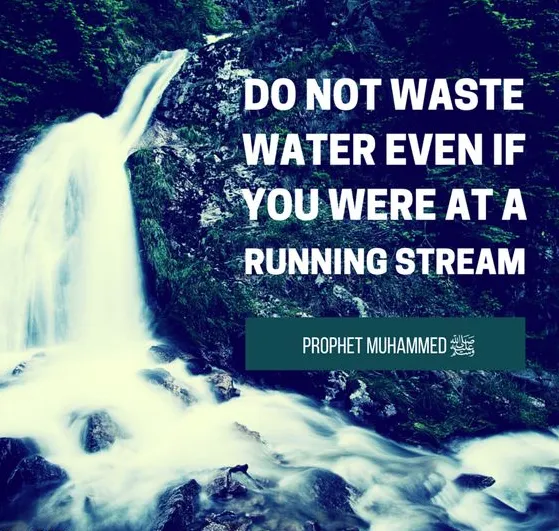
- Conserve water. The less water you use, the less runoff and wastewater that eventually end up in the ocean.
- Choose sustainable
- Shop wisely. Buy less plastic and bring a reusable shopping bag.
- Use long-lasting light bulbs. Energy efficient light bulbs reduce greenhouse gas emissions. Also flip the light switch off when you leave the room!
- Buy local to reduce transport costs
- Plant a tree. Trees provide food and oxygen. They help save energy, clean the air, and help combat climate change. Allah's Messenger (ﷺ) said, "There is none amongst the Muslims who plants a tree or sows seeds, and then a bird, or a person or an animal eats from it, but is regarded as a charitable gift for him." [Sahih al-Bukhari 2320]
- Get involved in local planting with planting locally through https://peacegardens.org.uk/ - Eat more veg: Today, one of the biggest causes of forest loss is the expansion of agricultural land for animal feed production, such as soy. And producing meat creates vastly more carbon dioxide than plants such as vegetables, grains and legumes.
- Choose non-toxic chemicals in the home and office.
- Bike more. Drive less.
It was reported from Abu Bakrah (may Allaah be pleased with him) that the Prophet SAWS (peace and blessings of Allaah be upon him) gave his Farewell Sermon and said: “Time has completed its cycle and is as it was on the Day when Allaah created the heavens and the earth. The year is twelve months, of which four are sacred, three consecutive months – Dhul-Qa’dah, Dhul-Hijjah and Muharram – and the Rajab of Mudar which comes between Jumaada and Sha’baan.” (Bukhari, Muslim, Ahmad, Abu Dawood and Baihaqi)
The meaning of Rajab - respect
Ibn Faaris said in Mu’jam Maqaayees al-Lughah (p. 445): The letters Ra’, jeem and ba’ form a root which indicates supporting and strengthening something with another thing. … Hence the phrase “Rajabtu’l-shay’” means I venerated it… It was called Rajab because they used to venerate it, and it is also venerated in Sharee’ah.
Al-Bayhaqi said: the people of the jaahiliyyah used to venerate these sacred months, especially the month of Rajab, and they would not fight during this month.
The Sacred months have a special status, which applies also to Rajab because it is one of these sacred months. Allaah says (interpretation of the meaning): “O you who believe! Violate not the sanctity of the Symbols of Allaah, nor of the Sacred Month…” [al-Maa’idah 5:2]
“They ask you concerning fighting in the sacred months. Say: fighting therein is a great (transgression)…” [al-Baqarah 2:217]
What to Do in These Months?
These months were prohibited from war and battle, so we should consider our fighting and disputes. This is the month to cut them out.
Good deeds are more blessed in these days, so Allah multiplies the rewards of good deeds. Imam ibn Rajab said: “Be careful of the acts of disobedience, because verily they forbid forgiveness in the seasons of mercy.”
Ibn Abbas (r.a) states, “Allah has selected and chosen four months then made them sacred and made their virtues to be the greatest. Sins committed in them would be greater than other times. He also made righteous good actions to be the greatest in them.”
If you commit a sin, it’s bad enough, but if you commit a sin in prayer, it makes it worse. So when Allah gives you a season of mercy, a season of forgiveness, then you need to capitalise on that and make sure that you don’t do anything that’s going to deprive you of the blessings of those rewards in those months. Use this time to improve yourself, your environment and your neighbourhood.