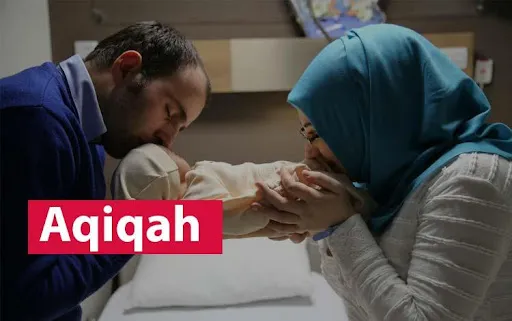
Samurah (may Allah be pleased with him) reported that the Messenger of Allah (may Allah's peace and blessings be upon him) said: "A child is held in pledge for his ‘Aqīqah which should be slaughtered on his behalf on the seventh day after his birth, and he should be given a name, and his head should be shaved." [Sahih Ibn Maajah - At-Tirmidhi - Abu Dawood - Ahmad - Ad-Daarimi]

Ibn Mundhir (rahimahullaah) stated:
“It is a custom established in the Hijaaz region past and present, and practised by the Scholars. Maalik (d.179H) mentioned that it is an affair concerning which there is no differing amongst them. From those who held that the `aqeeqah should be done is: `Abdullaah Ibn `Abbaas, `Abdullaah Ibn `Umar and `Aa’ishah, the Mother of the Believers (radiyallaahu `anhum).
(Tuhfatul-Mawdood bi Ahkāmil-Mawlood, p.69.)
It was narrated from Salmaan ibn ‘Aamir al-Dabbi that the Prophet (peace and blessings of Allaah be upon him) said: I heard the Messenger of Allaah (peace and blessings of Allaah be upon him) say: “ ‘Aqeeqah is to be offered for a (newly born) boy, so slaughter (an animal) for him, and remove all dirt from him.” (Narrated by al-Bukhaari, 5154)
Buraydah (may Allah be pleased with him) said: During the Jahiliyyah, if a boy was born to one of us, we would slaughter a sheep and smear his head with its blood. When Allah brought Islam, we would slaughter a sheep and shave (the child’s) head and smear it with saffron. (Narrated by Abu Dawood, 2843; classed as saheeh by Shaykh al-Albani in Saheeh Abi Dawood)
Salman ibn ‘Amir (may Allah be pleased with him) narrated that the Prophet (peace and blessings of Allah be upon him) said: “For a boy there should be ‘aqeeqah so shed blood for him and remove the dirt from him.” (Narrated by al-Bukhari, 5154)
It was narrated from ‘Aaishah (may Allaah be pleased with her) that the Messenger of Allaah (peace and blessings of Allaah be upon him) commanded them to sacrifice two similar sheep for a boy and one for a girl.
Narrated by al-Tirmidhi; he said, it is hasan saheeh; Ibn Maajah, 3163; Saheeh al-Tirmidhi, 1221.
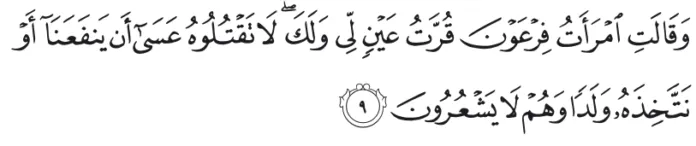
Two women in the Qur’an say exactly the same thing - the wife of Fir’own and the wife of the Azeez in two different times. Hopefully this child will benefit us and we will adopt him as a son.
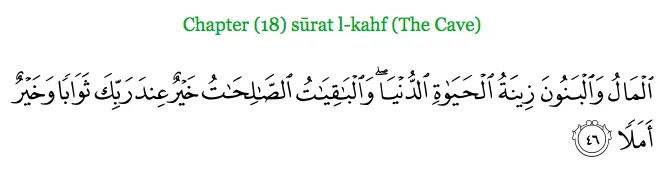
Every blessing has responsibility - there are strings attached. The primary responsibility to raise their children to be righteous Muslims.

Ibn Abbas, Aishah, Anas, Ali and others (RA) reported,“Allah’s Messenger offered aqeeqah for al-Hasan and al-Husayn: a ram, a ram (two rams, two rams).”
in Yemen, a young boy is herding his sheep, the sun beating down on his shoulders where a white mark stands alone on his dark skin. He is frustrated from being poor and having to struggle and take care of his mother. His father died when he was a young child, leaving him the man of the house. When the boy was seventeen, his mother lost her vision, and his responsibilities toward her increased as he now had to help her move around.
One night, he was carrying a candle and helping his mother move around the house when the candlelight went out and they were left in darkness. He could not see a thing. Then his mother, who was used to finding her way in the darkness, started leading him. This turn of events affected him deeply and he started to ponder on the weight of light and darkness.
The next day, the seventeen-year-old Owais bumped into a Muslim man who was coming to Yemen to spread Islam. He stopped the man and asked him to tell him something from the Quran that his Prophet ﷺ has said. So the man recites a verse from Surat Al Nur:

{…And he for whom Allah has not appointed light, for him there is no light} (Quran 24:40)
This really hit home for Owais as he remembered what had happened the night before with his mother. “Tell me more about what your Prophet ﷺ says,” said Owais.
So the man, noticing that Owais was poor, chose this Hadith.
It was narrated that ‘Abdullah said: “The Prophet (ﷺ) lay down on a reed mat, and it left marks on his skin. I said: ‘May my father and mother be ransomed for you, O Messenger of Allah! If you had told us we would have provided you with something that would save you this trouble.’ The Messenger of Allah (ﷺ) said: ‘What is there between myself and the world? This world and I are just like a rider who stops to rest beneath the shade of a tree then goes and leaves it.’” [Hassan, Sunan Ibn Majah 4109]

Owais upon hearing this Hadith, immediately said his shahadah and became a Muslim at the age of 17. Then came the question, will he migrate to see the Prophet ﷺ? As much as Owais wanted to, he couldn’t and wouldn’t leave his mother. Some people suggested that he let some neighbors take care of her while he was gone but he said that he was the one who should take care of her and turned down the opportunity to see the Prophet ﷺ. This sacrifice for his mother and the way Owais had devoted himself to his mother his whole life was the reason that he was mentioned by the Prophet ﷺ. Also because of his deep faith and his lack of attachment to the material things in this world.
So when Ali bin Abu Talib left Yemen with a group of new Muslims to go back to Madinah, it was without the boy he bumped into on his way there. He had no idea that it the Owais that the Prophet ﷺ had mentioned and the boy didn’t know it was Ali bin Abu Talib.
3 years later, the Prophet ﷺ passed away and years after that Abu Bakr also passed away. When Umar ibn AlKhattab became Khalifa, he would go around all the people during Hajj and call out, “OWAIS, OWAIS, Is there anyone here named Owais?” He would go to the group that came from Yemen and ask them if a man named Owais is among them. But no one had heard of this man. Umar realized it was just as the Prophet ﷺ described to him, that he was a man who was unknown among the people.
Year after year, Umar would go around at Hajj and call out and ask for Owais. One year during Hajj, he stood at Mount Arafat and asked all the people making Hajj to stand up. Then he told everyone to sit down except those from Yemen. From that group, he told them all to sit down except those from Murad and from that group, he told them all to sit down except those from Qarn. One man was left standing. “Are you a Qarni?” asked Umar ibn Al Khattab. The man replied in the affirmative. “Do you know Owais?” “Yes, he is my nephew. But what would you want with him. He is but a poor, forgotten man,” replied the Yemeni man.
Umar started to weep. “This man is not just a poor, forgotten man. He is a man who will choose 200,000 people to come with him into heaven. Is he with you?”
“No, he is not,” replied the man.
“Is his mother living,” asked Umar.
“Yes,” replied the man.
“I know he will not ever leave her, as this is what the Prophet ﷺ said,” replied Umar.
Umar searched for Owais for ten years. A year before the death of Umar, Owais’s mother passed away. That year, Umar stood up at Mount Arafat again and said to the people of Yemen, “Is Owais al Qarni among you?” A Yemeni man said, “He is that sheppard standing over there.” Umar became so excited and went to look for Ali. “Ali! Ali! We found him!” he called out.
Umar and Ali approached Owais and asked him, “Are you Owais al Qarni?”
“Yes,” replied a surprised Owais. “Show me your shoulder,” replied Umar. Owais showed them his shoulder and they were able to see the mark that the Prophet ﷺ mentioned. “Is your mother with you?” asked Umar. Owais replied that his mother had passed away. “Ah, it is just as the Prophet ﷺ said it would be then,” said Umar.
Owais actually did not know these men so he asked them who they were. “I am Umar ibn AlKhattab, the Khalifa, and this is Ali ibn Abu Talib, the man who came to Yemen to spread Islam,” said Umar.
“Yes! I remember him! But, how do you know me?” asked Owais.
So Umar told Owais the whole story about how the Prophet ﷺ had talked about him years ago and how Angel Gabriel had described him. They said how his signs were the mark on his shoulder, his care for his mother, and his lack of attachment to this world. He said how Prophet ﷺ told them that he would take 200,000 people with him into Paradise. They told him how they had been looking for him for years.
Umar and Ali then asked Owais to make duaa for them and ask forgiveness for him. “You are now my friend in this life and the next,” Umar said to Owais. However, Owais was not interested in the life of fame and ease that would come with being Umar’s friend, especially when people find out what the Prophet ﷺ had said about him. He kindly refused, and asked to be left as he is.
Owais said he was going to go to Kufa. “Would you like me to write to the leader of Kufa to await your arrival and look after you?” asked Umar.
“No thank you. I would like to go unknown as I came,” replied Owais.
“Ok then at least let me give you some money to help you out,” said Umar in an effort to do at least something for Owais. “No thank you, my wool coat has still not worn out and neither have my shoes. I have four dirhams that I have still not used. When I run out, I will figure out how to get more. I am content this way,” replied Owais.
“Please stay with me,” said Umar. “Thank you Umar. But what I have is good for me and what you have is good for you and the Muslims,” said Owais.
Owais left Mecca. He participated in the battle at Azerbaijan and died during the battle. His death came about 2 years after the death of Umar ibn AlKhattab. Owais was about 35 years old.
Advice to Parents
- Be a role model yourself
- Establishing a routine where you and your children are praying on time, because we are teaching them there is an authority even higher than us, our parents
- Make dua for your children